How to Use Pakistan Health Card 2026 for Free Hospital Treatment – Complete Step-by-Step Guide
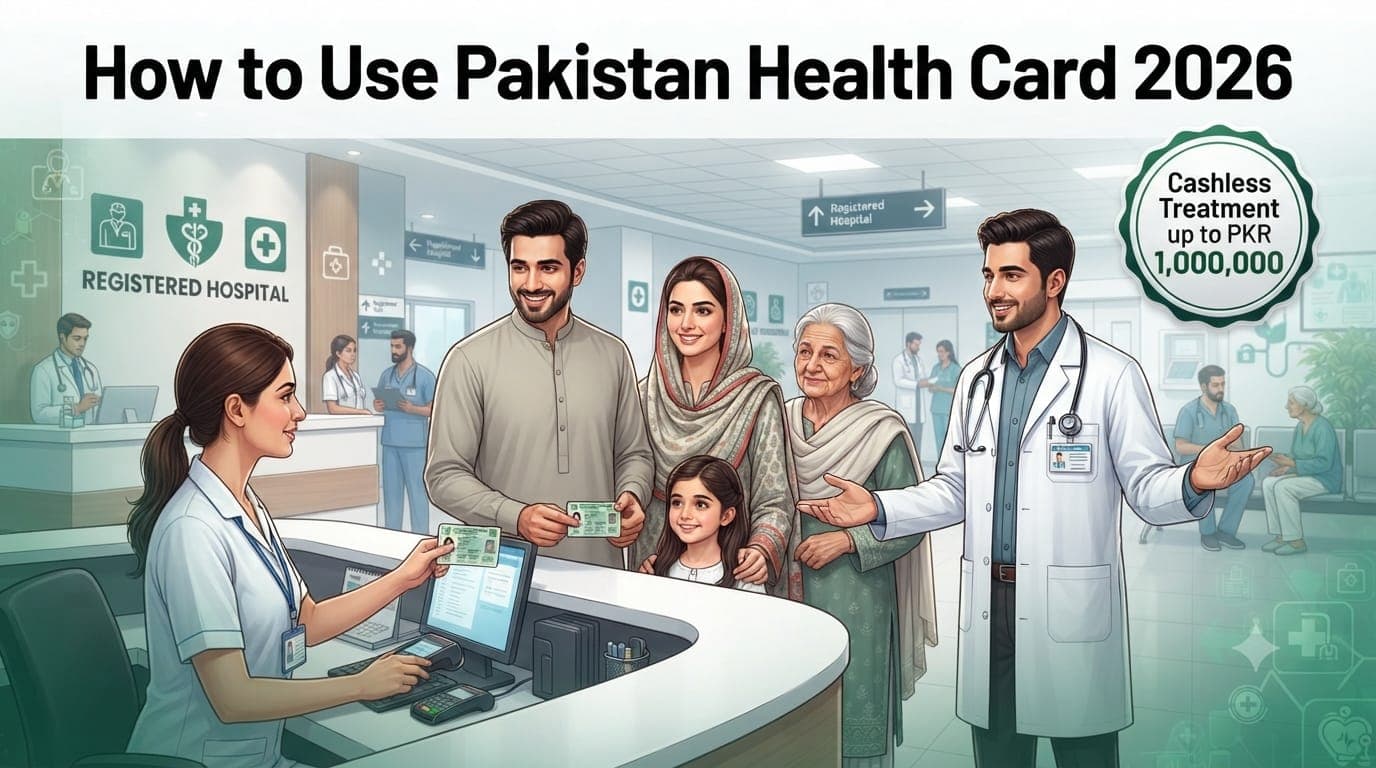
How to Use Pakistan Health Card 2026 for Free Hospital Treatment – Complete Guide
Healthcare costs can be challenging for many families, especially when emergency treatment or major surgery is required. The Pakistan Health Card 2026 helps eligible citizens receive cashless inpatient medical treatment at approved public and private hospitals without paying hospital admission charges upfront.
Many people know they are eligible for the Health Card but are unsure how to actually use it. This guide explains the complete process—from checking your eligibility to receiving treatment—so you can make full use of the program.
What is Pakistan Health Card 2026?
The Pakistan Health Card 2026 is a government-supported healthcare program that allows eligible families to receive medical treatment through a network of empaneled hospitals.
Unlike traditional health insurance cards, your Computerized National Identity Card (CNIC) acts as your Health Card. Once your eligibility is verified digitally, you can receive approved inpatient treatment without making advance payments.
Eligible families may receive up to PKR 1,000,000 annually for covered inpatient healthcare services according to program policies.
Step 1 – Verify Your Eligibility
Before visiting any hospital, confirm that you are eligible for the Health Card.
Check by SMS
Send your CNIC number to:
8500 (General verification)
9780 (For Khyber Pakhtunkhwa)
Within a short time, you will receive a message showing whether you are eligible for the program.
Check Online
You can also verify your eligibility through the official PHIMC or Sehat Sahulat Program portal by entering your CNIC number.
Step 2 – Visit a Registered Hospital
Once your eligibility is confirmed, visit a hospital that is part of the approved State Life Insurance network.
Both government and private hospitals participate in the Health Card program, but always confirm that your selected hospital is currently empaneled before your visit.
Step 3 – Bring Required Documents
Carry the following documents when visiting the hospital:
Original CNIC
B-Form (for children)
Hospital referral documents (if required)
Having the correct documents helps complete the verification process without unnecessary delays.
Step 4 – Complete Digital Verification
At the hospital registration desk, staff will verify your CNIC through the Health Card system.
If your eligibility is confirmed, the hospital will process your admission under the Health Card program.
No physical Health Card is required because your CNIC serves as your identification.
Step 5 – Receive Cashless Treatment
After successful verification, eligible patients can receive approved inpatient treatment without making advance hospital payments.
The treatment cost is managed according to the Health Card program guidelines and approved coverage.
Medical Services Available
The Health Card mainly covers inpatient hospital treatment, including:
Major Surgeries
Cardiac surgery
Neurosurgery
Organ transplant procedures (subject to policy)
Cancer Treatment
Chemotherapy
Radiotherapy
Kidney Care
Dialysis
Renal treatment
Maternity Services
Childbirth
Pregnancy-related hospitalization
Emergency Medical Care
Road traffic accidents
Burn treatment
Emergency admissions
Chronic Disease Complications
Patients suffering from serious complications related to diabetes and other eligible medical conditions may also receive covered inpatient treatment according to program rules.
Family Members Covered
The Health Card generally covers:
Head of the family
Husband or wife
All unmarried children
Newborn babies delivered in empaneled hospitals are automatically included under family coverage.
Tips Before Visiting the Hospital
To avoid delays, follow these recommendations:
Confirm your eligibility before leaving home.
Carry your original CNIC.
Visit only approved hospitals.
Follow hospital admission procedures.
Keep your registered mobile number active for updates.
Common Mistakes to Avoid
Many applicants experience delays because they make simple mistakes.
Avoid these issues:
Visiting a non-registered hospital.
Carrying an expired CNIC.
Assuming every medical service is automatically covered.
Skipping eligibility verification before visiting the hospital.
Checking these details in advance can save valuable time during emergencies.
Health Card Helpline
If you need assistance, contact the official 24/7 Health Card Helpline: 0800-09009.
The helpline can assist with eligibility information, hospital guidance, and general inquiries.
Frequently Asked Questions
Is a separate Health Card required?
No. Your CNIC serves as your Health Card.
Can I receive treatment at private hospitals?
Yes. Eligible patients can receive treatment at empaneled private hospitals participating in the approved network.
How much coverage is available?
Eligible families may receive coverage of up to PKR 1,000,000 per year for approved inpatient treatment.
How do I verify my eligibility?
Send your CNIC number to 8500 (or 9780 in Khyber Pakhtunkhwa) or check online through the official portal.
Is outpatient treatment included?
The available program information mainly covers cashless inpatient treatment.
Final Words
The Pakistan Health Card 2026 makes quality healthcare more accessible by allowing eligible families to receive cashless inpatient treatment at registered hospitals across Pakistan. With simple CNIC-based verification, patients can benefit from major surgeries, cancer treatment, dialysis, maternity care, and emergency services without worrying about large upfront medical expenses.
Before visiting a hospital, always verify your eligibility, carry your original CNIC, and confirm that the hospital participates in the approved Health Card network to ensure a smooth treatment process.